Tagliatelle Bolognese Recipe
Discover the secret behind the perfect Tagliatelle Bolognese with rich slow-simmered ragù, cooking tips, serving ideas and ingredient variations. A classic Italian dish that is great for family dinner or an elegant dinner party.
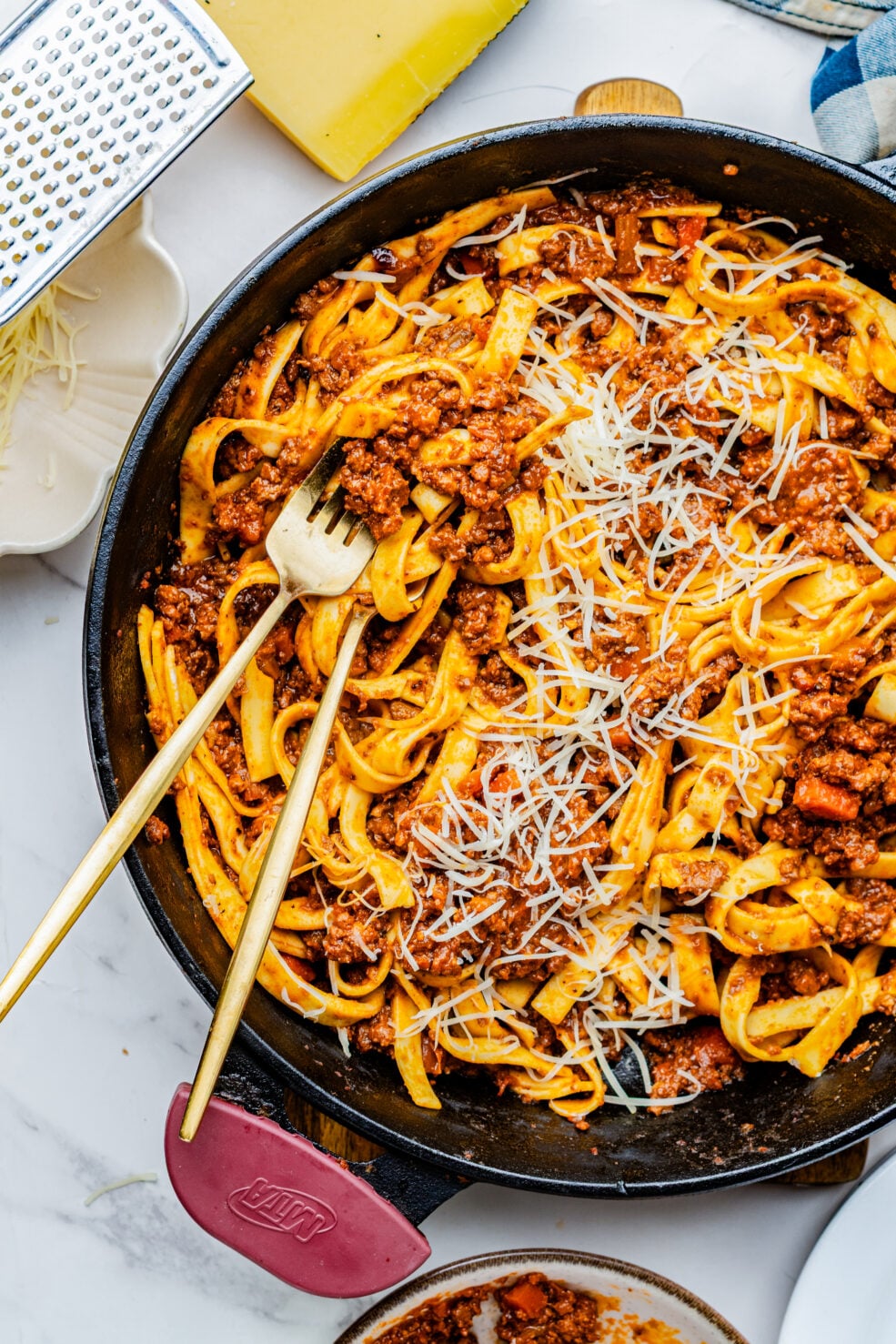
When you come home hungry and tired, nothing quite hits the spot like a big steaming bowl of pasta and sauce. It’s warm, comforting and fills those empty tummies at the end of a long day. Pasta was always my go-to when my daughter was young because it was never a fight to finish dinner.
Remember, we made this CLASSIC BOLOGNESE SAUCE as a meal-prep hack. Plus rage sauce tastes better the next day anyways. Having that sauce ready in the fridge makes this weeknight dinner so quick and easy. Hooray for planning ahead! Now we can just focus on making this Tagliatelle Bolognese the perfect comforting pasta meal.
Table of Contents
Why is tagliatelle used instead of spaghetti?
The broad, flat shape holds the rich meat sauce beautifully, creating a balanced bite of pasta and ragù.
How do you cook tagliatelle perfectly?
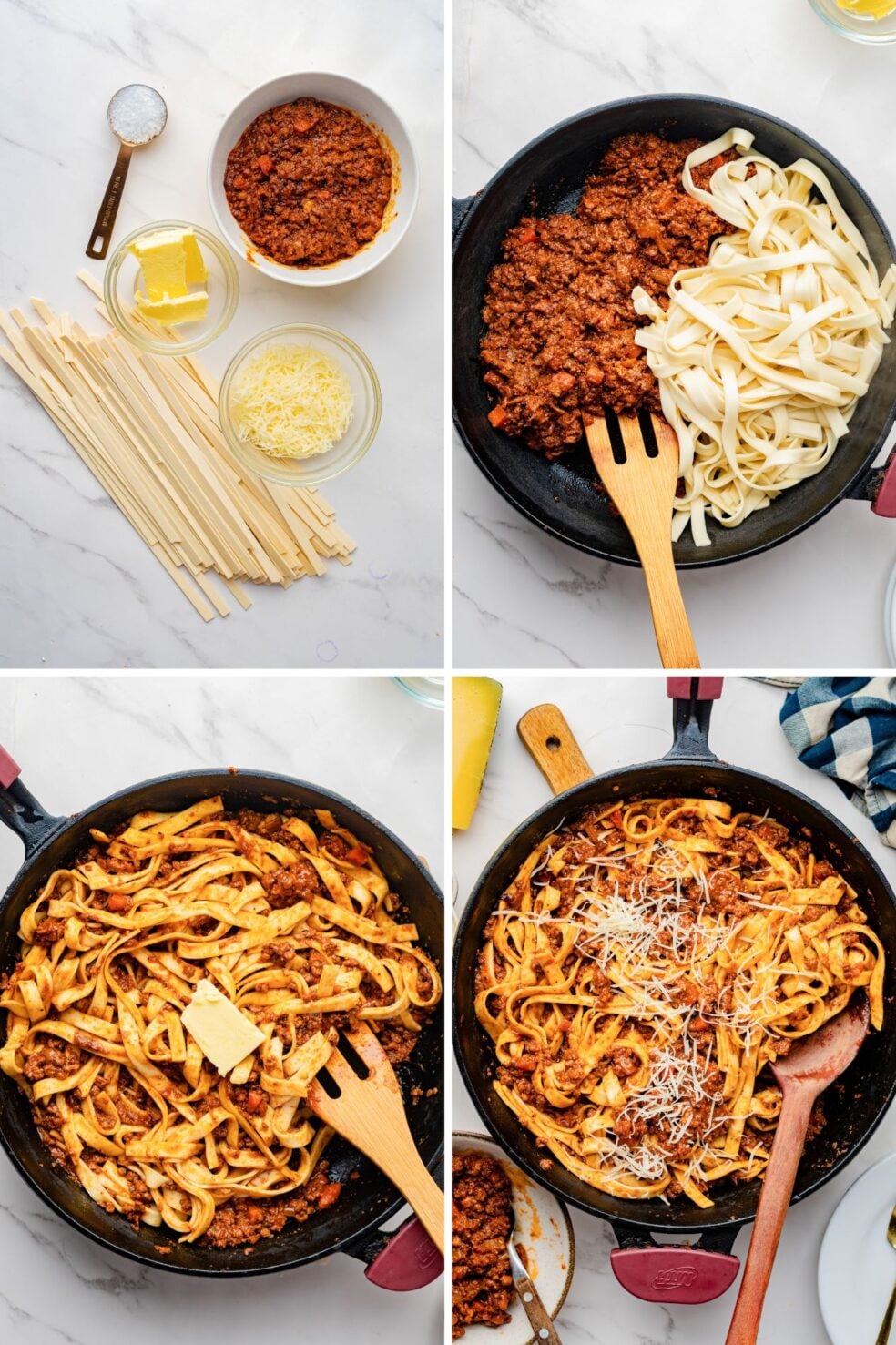
Cook in well-salted boiling water until al dente, following the packageinstructions or checking fresh pastafrequently. Finish tossing it in the ragù with a splash of pasta water.
I used to serve bolognese by ladling sauce over drained pasta in a bowl. It looked fine, tasted fine. Then I tried finishing the pasta directly in the pan with the ragù and a splash of pasta water. Game Changer.
Why Fresh Tagliatelle vs Dried Matters
Problem: Dried tagliatelle nests often break into shorter pieces and don’t cling to the sauce as effectively. Solution: Fresh packaged tagliatelle (the kind sold refrigerated) has a slightly porous, egg-enriched surface that grips the ragù better.
If using dried, choose a brand with a rough, extruded texture (bronze-die cut) rather than smooth.
How To Plate Tagliatelle Bolognese
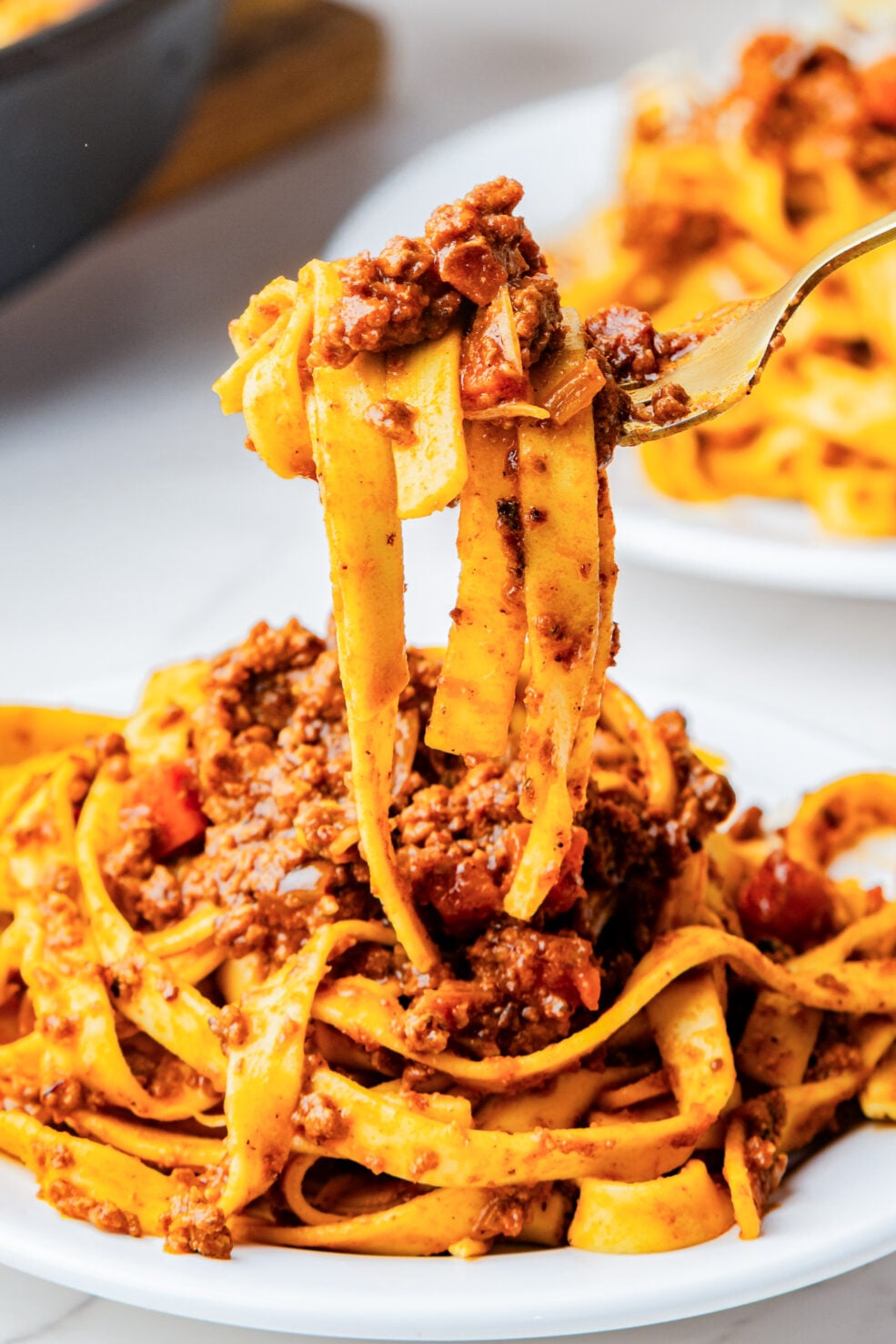
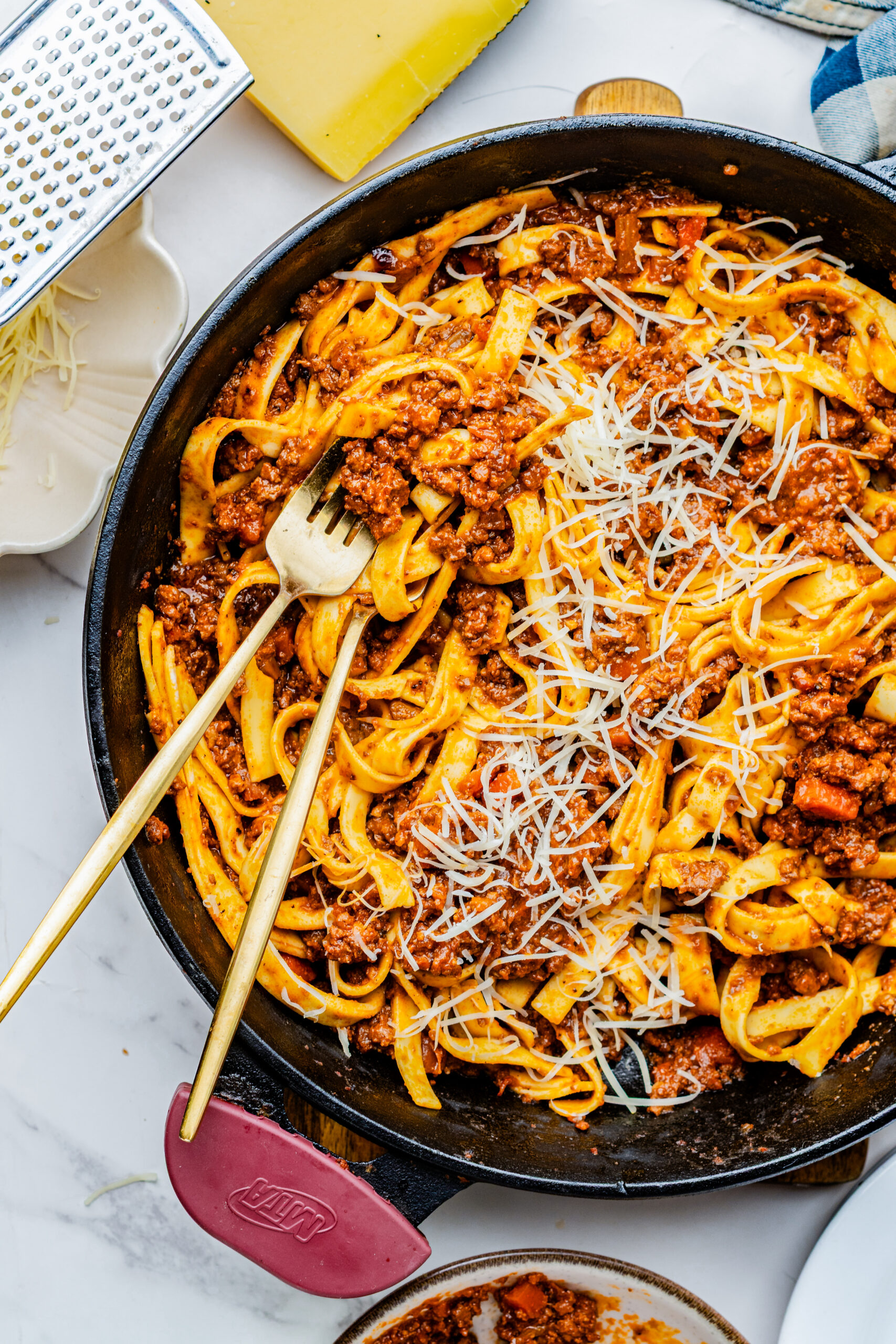
Use a warm, wide-rimmed bowl. Twirl the tagliatelle into a nest, spoon additional ragù over the top. Finish with finely grated Parmigiano Reggiano and black pepper.
Serving Suggestions:
For a fresh start: Serve a simple salad ➤ Garden Italian Salad, Lemon Garlic Kale Salad
For a vegetable side: Try roasted zucchini, Roasted Asparagus, or sautéed seasonal greens.
For the finishing touch: Serve extra Parmigiano Reggiano at the table, along with freshly ground black pepper.
For a complete dinner: Begin with a light antipasto, follow with Tagliatelle Bolognese, and finish with panna cotta, fresh fruit, or a small serving of Tiramisu.
Recipe Tips & Notes
Timing: Have the sauce warm and ready before you drop the pasta: tagliatelle cooks fast (2–4 min fresh, 8–10 min dried)
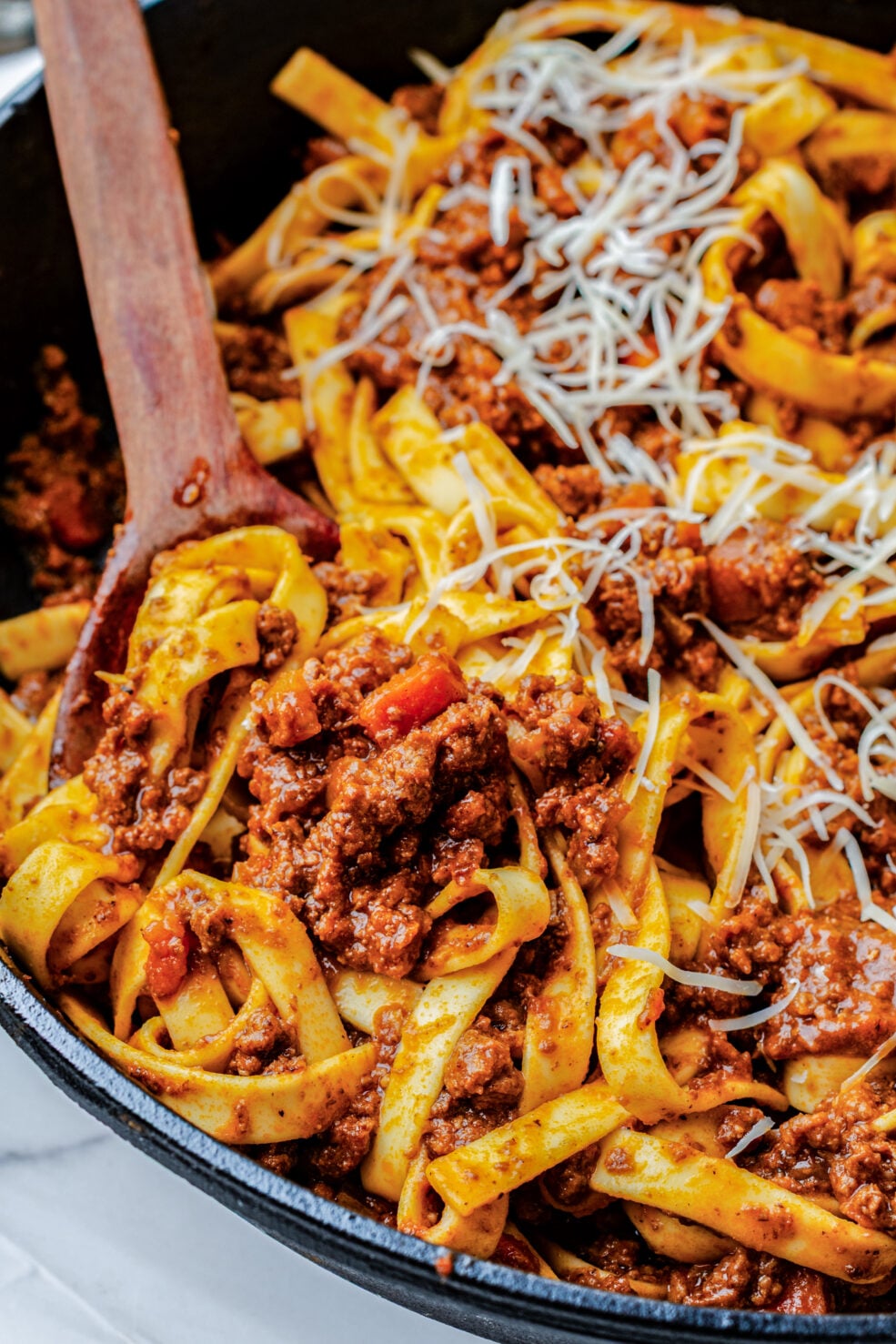
Parmigiano: Use a block and grate it yourself. Pre-grated Parmesan contains cellulose that prevents it from melting properly into the sauce.
Serving: Serve immediately: tagliatelle bolognese does not sit. The pasta continues to absorb the sauce and softens quickly.
Quantities: Scale the sauce quantity generously: bolognese should coat every strand completely, not just sit at the bottom of the bowl.
FAQ’s
Tagliatelle is a broad, flat pasta that holds rich meat sauce well. In Bologna, tagliatelle is the traditional pasta pairing for ragù, while spaghetti Bolognese is a no traditional variation.
The pasta usually takes around 5–12 minutes to cook, depending on whether it is fresh or dried. The Bolognese sauce requires slow simmering for 2–3 hours or longer.
Parmigiano-Reggiano is the classic choice. Grate it finely over the pasta just before serving for a savory, nutty finish.
Save this Recipe!
Enter your email & I’ll send it straight to your inbox.
Tagliatelle Bolognese
Ingredients
- 7 oz 200g tagliatelle (fresh packaged preferred, dried works)
- 10 oz 280g Classic Bolognese Sauce
- 1 tbsp unsalted butter cold, cut into small pieces
- Parmigiano Reggiano freshly grated, to serve
- Kosher salt for pasta water
Instructions
- Bring a large pot of water to a rolling boil. Salt generously: it should taste like mild seawater.
- Warm the bolognese sauce in a wide skillet or sauté pan over low heat. Keep it at a gentle simmer while pasta cooks.
- Cook tagliatelle 1 minute less than package directions. Reserve 1 cup of pasta cooking water before draining.
- Transfer pasta directly from pot to the pan with the ragù using tongs. Add a ladleful of pasta water.
- Toss over medium heat for 1–2 minutes until sauce coats every strand and liquid is mostly absorbed. Add more pasta water if needed to loosen.
- Remove from heat. Add cold butter pieces and toss vigorously until melted and sauce turns glossy.
- Plate immediately. Finish with freshly grated Parmigiano Reggiano.
Nutrition
Follow WonkyWonderful on Pinterest to stay up to date on all of the new recipes!

Welcome!
Nicole Harris is the recipe creator behind WonkyWonderful, sharing fast, budget-friendly meals for busy families. Since 2012 she’s been developing 30-minute dinners, kid-approved favorites, and holiday dishes with flair - all with real ingredients and no fuss. She grew up stretching simple pantry staples into something delicious, and that shows up in every recipe: easy, affordable, and full of flavor. Read more...